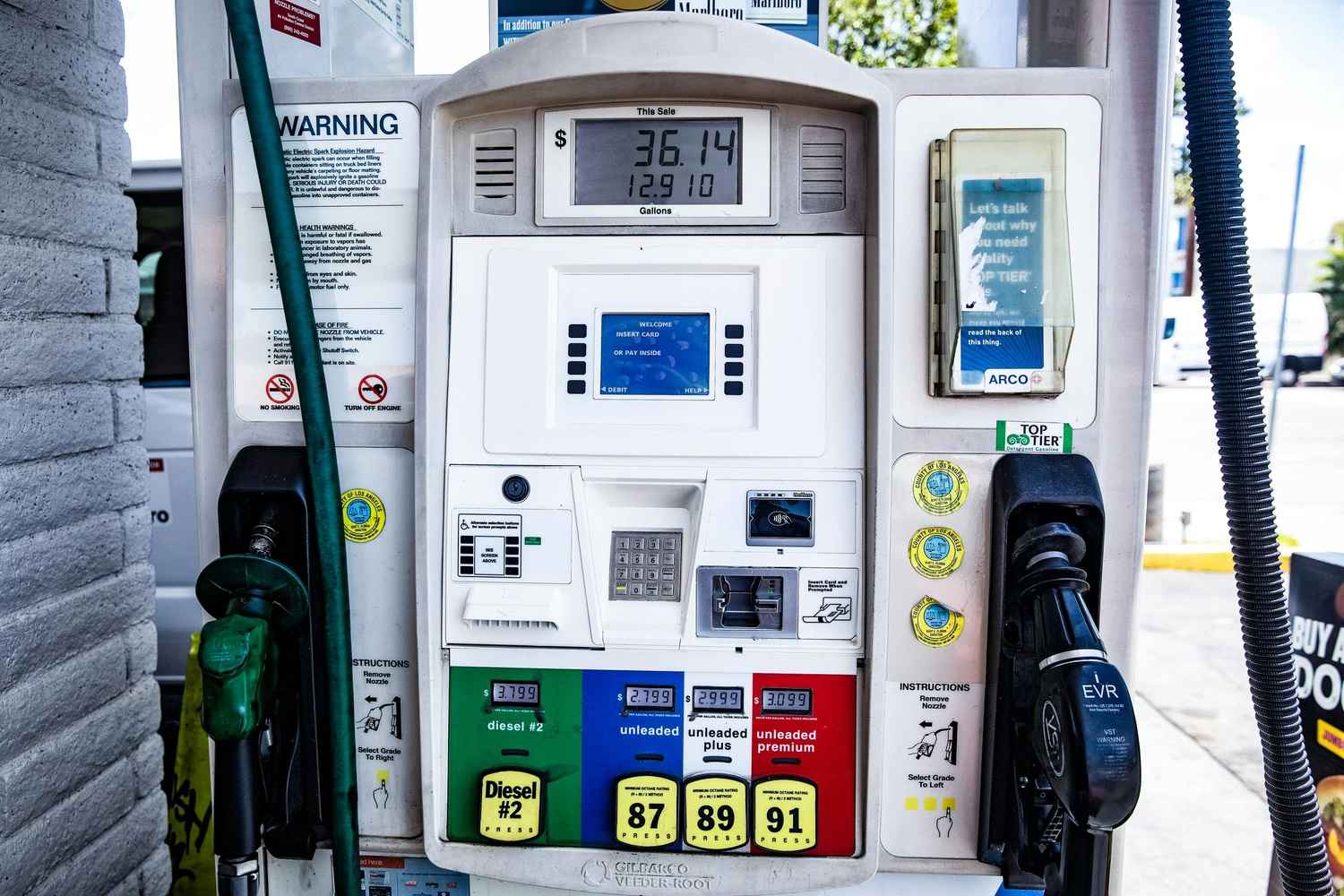
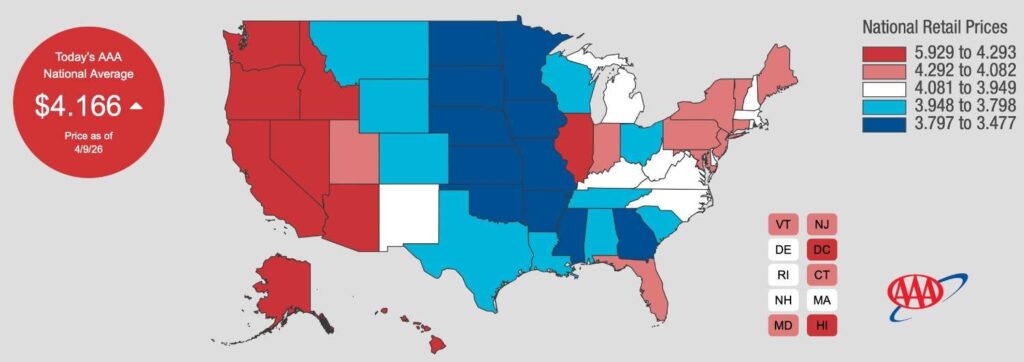
Gas prices across the United States have surged sharply, with the national average climbing to $4.16 per gallon as of April 9, according to data from AAA. This marks the first time in four years that prices have crossed the $4 threshold, highlighting a rapid shift in fuel costs.
The move higher has been driven largely by ongoing geopolitical tensions in the Middle East, which have disrupted global oil markets and introduced fresh supply uncertainty. As a result, volatility has increased and consumers across the U.S. are now facing noticeably higher costs at the pump.
West Coast states dominate list of highest gas prices
While the national average sits at $4.16, prices vary significantly by region. In particular, the West Coast continues to dominate the list of most expensive states due to a combination of higher taxes, stricter environmental regulations, and supply constraints.
California leads with gas prices nearing $6 per gallon
California remains the most expensive state for gasoline by a wide margin, with average prices reaching $5.89 per gallon. In some areas, costs are even higher, with San Francisco averaging around $6.07 per gallon. Elevated fuel taxes, environmental policies, and limited refining capacity continue to drive prices higher than anywhere else in the country.
Hawaii faces elevated costs due to geographic isolation
In Hawaii, gas prices are averaging about $5.50 per gallon, reflecting the state’s reliance on imported fuel. Because gasoline must be shipped to the islands, transportation costs are embedded into pricing, making Hawaii particularly sensitive to global oil market fluctuations.
Washington and Oregon see continued upward pressure
Washington ranks among the most expensive states, with gas prices around $5.36 per gallon. Policy-driven costs, including carbon-related measures, have contributed to the increase. Meanwhile, Oregon follows closely, with prices near $4.96 per gallon, supported by regional supply limitations and infrastructure constraints.
Rising costs spread beyond the West
Although the West remains the most expensive region, elevated gas prices are spreading across other parts of the country as well.
Nevada and Arizona impacted by regional supply dynamics
In Nevada, drivers are paying roughly $4.94 per gallon, with higher prices in urban centers like Las Vegas. Similarly, Arizona has seen rapid increases, with prices around $4.68 per gallon, driven in part by its proximity to California’s fuel market and shared supply pressures.
Alaska remains expensive despite oil production
Despite being a major oil-producing state, Alaska continues to face high fuel costs, averaging about $4.59 per gallon. Geographic challenges and distribution logistics, especially in remote areas, keep prices elevated.
Illinois stands out outside the West
Among non-Western states, Illinois ranks as one of the most expensive, with gas prices around $4.26 per gallon. Higher state taxes and regional supply factors, particularly around Chicago, contribute to the elevated costs.
Idaho and Florida round out the top 10
Idaho is also among the most expensive states, with average prices approaching $4.26 per gallon, driven by its inland location and reliance on fuel imports. Meanwhile, Florida rounds out the top 10, with prices just under $4.23 per gallon, supported by strong demand, tourism activity, and regional supply logistics.
What it means for drivers
As gas prices continue to rise, regional disparities are becoming more pronounced. While national averages provide a broad picture, drivers in certain states are facing significantly higher costs due to local factors.
Looking ahead, the trajectory of oil markets and geopolitical developments will remain key drivers. If current tensions persist, elevated gas prices could continue to put pressure on consumers across the country, particularly in already high-cost regions.
Featured image via Pexels/Ekaterina Belinskaya